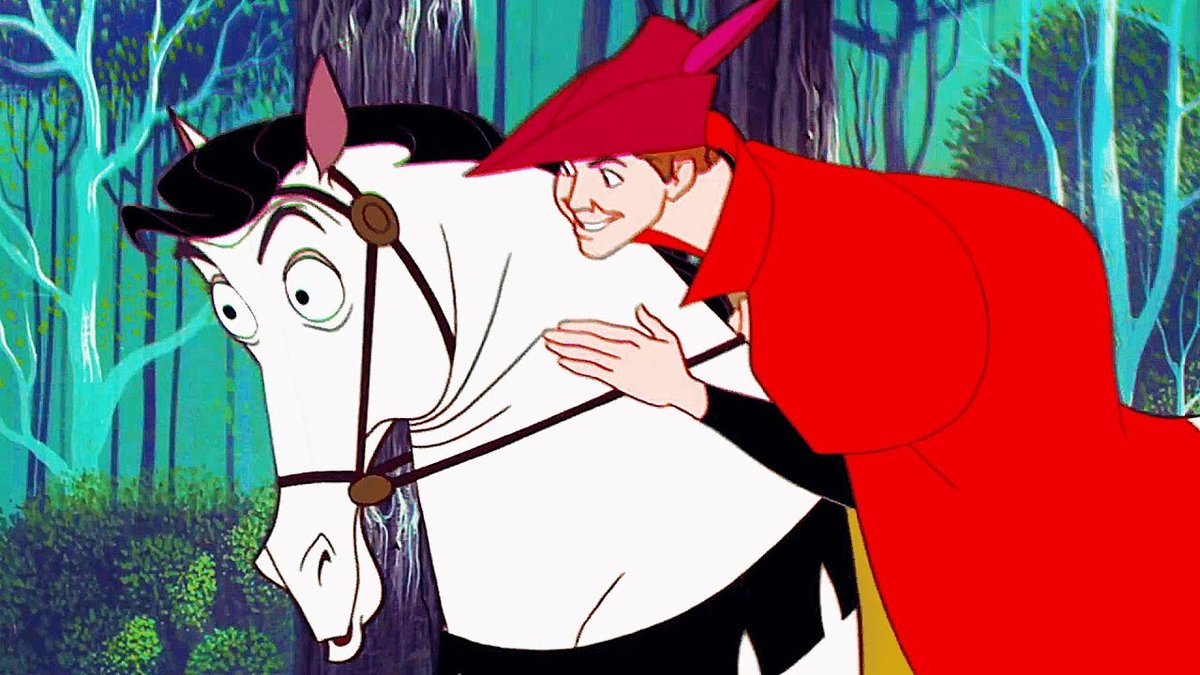
Step into the enchanting world of one of Disney's most iconic princes, and you’ll quickly realize there’s far more to his charm than meets the eye. From his dashing animated swordplay to his unwavering vocal courage, Behind the Scenes: Creating Prince Phillip's Animation and Voice reveals a complex tapestry of artistic and technical wizardry. It's a journey spanning decades, multiple interpretations, and a surprising number of talented individuals who've breathed life into Aurora's beloved hero.
He's not just a character; he's a collaborative masterpiece, evolving through the meticulous strokes of animators and the nuanced deliveries of an array of voice actors, each leaving their unique mark on his enduring legacy.
At a Glance: Prince Phillip's Creative Journey
- A Multitude of Voices: Prince Phillip has been voiced by a remarkable number of actors, with 5 primary English versions across 5 different titles, plus an extensive list of international dubbing artists for the original Sleeping Beauty.
- Original Icon: Bill Shirley was the seminal voice of Prince Phillip in Disney’s 1959 classic, notably lending his singing talent to the role.
- Animation Evolution: From the hand-drawn realism of the 1959 film to the diverse styles of video games and direct-to-video sequels, Phillip's visual representation has constantly adapted.
- Beyond the Classic: His character has been re-imagined and re-voiced in subsequent productions like Disney Princess Enchanted Tales: Follow Your Dreams and Kingdom Hearts: Birth by Sleep.
- Parodic Interpretations: Even comedic takes, such as those in Robot Chicken, showcase how his core character resonates and can be playfully deconstructed.
- Global Appeal: The sheer number of international voice actors underscores Phillip's worldwide impact and Disney's commitment to delivering an authentic experience to diverse audiences.
The Royal Debut: Forging a Prince in 1959
The year 1959 saw the grand premiere of Disney's Sleeping Beauty, a film renowned for its striking animation, Tchaikovsky-inspired score, and its brave, proactive hero: Prince Phillip. Unlike many princes of his era who merely rescued, Phillip actively fought, pursued, and even charmed his way through the narrative. Creating this dynamic figure was an enormous undertaking, a testament to the artistry of Disney's Golden Age.
The animators tasked with bringing Phillip to life faced a unique challenge. Walt Disney himself pushed for a more realistic, almost three-dimensional style, deviating from the softer, more fluid animation of earlier films like Cinderella. This meant animators meticulously studied live-action references, often using rotoscoping—tracing over filmed footage of actors—to capture the nuances of human movement, especially during complex scenes like Phillip's epic battle with Maleficent as a dragon.
The visual blueprint for Prince Phillip and Sleeping Beauty involved a blend of heroic archetype and relatable humanity. His design, with broad shoulders, a confident stance, and a distinctive caped tunic, conveyed both regality and a readiness for action. Every tilt of his head, every swing of his sword, was painstakingly drawn, frame by frame, to ensure he felt like a tangible, living character in a stylized world.
The Voice That Won a Princess: Bill Shirley's Original Spark
Matching this visual grandeur with an equally compelling voice was paramount. For the original 1959 film, the role of Prince Phillip fell to Bill Shirley. A talented actor and singer, Shirley brought a rich, warm baritone to the prince, infusing him with both charm and steadfast resolve. His vocal performance was crucial, not just for Phillip's dialogue, but for his iconic songs. Imagine Phillip without "I Wonder" or "Once Upon a Dream" – Shirley’s voice made those moments unforgettable.
Shirley’s background as a singer made him an ideal choice, allowing the character to seamlessly transition between spoken lines and musical numbers. He wasn't just reading lines; he was embodying a hero through song, conveying hope, determination, and romance in equal measure. This foundational performance set the benchmark for every subsequent portrayal of Phillip.
An Enduring Legacy: Phillip's Voice Across Generations
While Bill Shirley laid the groundwork, the world of Prince Phillip has expanded far beyond the initial 1959 classic. Disney's beloved characters frequently reappear in sequels, spin-offs, video games, and international adaptations, each requiring new talent to maintain their essence while fitting into new contexts. This is why Phillip's voice has been incarnated in numerous versions across multiple titles.
Think about the global reach of Disney. To serve audiences worldwide, films are meticulously dubbed into dozens of languages. This explains the extensive list of voice actors for Sleeping Beauty alone. Beyond the original English, you have voices like Toshihiro Tachibana and Toru Furusawa in Japan, Mario Filio and Manuel Acosta in Mexico, Guy Chapellier in France, and Sergio Tedesco in Italy, among many others. Each of these artists was tasked with capturing Phillip's heroism and heart for their specific cultural audience, a monumental undertaking that requires both linguistic skill and a deep understanding of the character.
For fans curious about the faces and sounds behind these roles, resources like Behind The Voice Actors (BTVA) become invaluable. Unlike simple text credit lists, BTVA offers a visual and audible experience, presenting images of actors alongside sound clips of their character roles. It’s a fantastic way to truly connect the voice you hear with the person who created it.
The Evolution of Phillip: Modern Incarnations
As Disney's universe grew, so did Prince Phillip's presence. New stories and technologies demanded fresh interpretations, keeping the prince relevant for new generations.
Disney Princess Enchanted Tales: Follow Your Dreams (2007)
Nearly five decades after Sleeping Beauty, Phillip reappeared in the direct-to-video movie, Disney Princess Enchanted Tales: Follow Your Dreams. For this outing, the role of Prince Phillip was taken on by Roger Craig Smith. Known for his versatile voice work in video games (like Sonic the Hedgehog and Ezio Auditore da Firenze from Assassin's Creed) and animation, Smith brought a slightly more contemporary sound to Phillip while still honoring the character's classic regal demeanor.
This particular film focused more on Aurora, giving Phillip a supporting but still vital role. Smith's challenge was to embody Phillip's protective and loving nature without overshadowing the film's central princess. It required a performance that was familiar enough to satisfy fans of the original but flexible enough for the new narrative style. International versions saw talents like Mario Filio (returning for Latin America), Simone D'Andrea (Italy), and Liron Lev (Israel) stepping into the role.
Kingdom Hearts: Birth by Sleep (2010)
The world of video games introduced a particularly dynamic version of Phillip. In Kingdom Hearts: Birth by Sleep, part of the beloved Disney-meets-Final Fantasy crossover series, Phillip plays a much more active, combat-ready role alongside the game's protagonists. Here, Josh Robert Thompson lent his voice to the prince.
Thompson, a gifted impressionist and voice actor, gave Phillip a heroic gravitas suited for the action-packed nature of Kingdom Hearts. He had to convey urgency, determination, and courage, often in battle scenarios, which is a different demand than the romantic or supporting roles in films. The original Japanese version featured Toru Furusawa, who also handled one of the Japanese dubs for the 1959 Sleeping Beauty, showcasing a remarkable consistency in casting across different media. This incarnation highlights how a character's voice needs to adapt to the medium – a game often requires more shouts, grunts, and battle cries than a traditional animated film.
A Brief Return: DTV Valentine (1986)
Interestingly, Bill Shirley himself briefly returned to voice Prince Phillip in the 1986 TV special, DTV Valentine. This appearance was a nostalgic treat for fans, bringing back the original voice for a new generation, albeit in a more lighthearted, musical montage format typical of DTV (Disney Television) specials. It served as a wonderful reminder of the enduring quality of his initial performance and the timeless appeal of the character.
The Art of Parody: Phillip Through a Different Lens
Not every portrayal of Prince Phillip is reverent. Sometimes, the most interesting interpretations come from those who playfully deconstruct the character.
Robot Chicken (2005)
The Adult Swim stop-motion sketch comedy show Robot Chicken is famous for its irreverent takes on pop culture icons, and Prince Phillip was no exception. In various sketches, Phillip was voiced by Tom Root and Seth Green, who is also one of the show's creators. These parodies often exaggerate Phillip's heroic qualities or place him in hilariously mundane or absurd modern scenarios.
The vocal performances in Robot Chicken demand a different kind of skill: comedic timing, the ability to deliver lines with irony, and often, a self-aware nod to the source material. Root and Green's portrayals aren't about recreating the classic Phillip; they're about twisting audience expectations for comedic effect, proving that the character's persona is so strong it can withstand, and even thrive, under parody. It’s a testament to the original design and performance that Phillip's essence remains recognizable even when being poked fun at.
The Craft: What Goes Into Voicing a Disney Prince?
Beyond just reading lines, voicing an iconic character like Prince Phillip involves a complex interplay of acting skill, vocal technique, and an understanding of the character's place in the larger Disney canon.
Matching Animation and Emotion
A voice actor's primary task is to bring emotion and personality to a character whose movements are already animated or are being animated in tandem. This means carefully timing lines to match lip-sync, conveying character intent through subtle vocal inflections, and delivering performances that enhance, rather than distract from, the visual. For Phillip, this often means projecting confidence, compassion, and courage, sometimes all within a single scene.
Consistency Across Iterations
When a character is voiced by multiple actors over time, maintaining a thread of consistency is crucial. While each actor brings their unique flair, they must also capture the "essence" of Phillip. This means understanding his core values: bravery, loyalty, a romantic spirit, and a proactive nature. Voice directors play a critical role here, guiding actors to ensure their performance aligns with the established character.
The Audition Process
Becoming the voice of a Disney Prince is a highly competitive endeavor. Auditions typically involve reading selected script passages, often alongside existing character lines to see how well the new voice blends. Directors listen for vocal quality, emotional range, and the ability to capture the desired personality. For singers like Bill Shirley, the musical aspect would have been equally scrutinized.
Animating the Modern Prince: Beyond Hand-Drawn
The evolution of Prince Phillip’s voice runs parallel to the advancements in animation itself. The 1959 Sleeping Beauty was a pinnacle of hand-drawn animation, a painstaking process of individual drawings brought to life. Fast forward to the 21st century, and animation has transformed dramatically.
For films like Disney Princess Enchanted Tales: Follow Your Dreams, the animation style was often more streamlined, utilizing digital tools and sometimes 2D animation with a more simplified aesthetic than the grand scale of the 1959 epic. This required animators to adapt Phillip's design while retaining his identifiable features. The goal was still to make him look heroic and appealing, but perhaps with less intricate detail to suit the production's budget and schedule.
In video games like Kingdom Hearts: Birth by Sleep, Phillip exists in a fully 3D, CGI environment. Here, animators and character modelers had to translate his classic 2D design into a three-dimensional model capable of complex movements, combat animations, and facial expressions suitable for a dynamic game engine. This involves creating intricate character rigs, texture mapping, and ensuring his iconic look is preserved from all angles. Despite the different techniques, the core challenge remains the same: to make Phillip a believable, engaging character, whether he's hand-drawn, digitally painted, or fully rendered in 3D.
Common Questions About Phillip's Portrayals
It's natural to have questions about a character with such a rich and varied history.
Why Does Prince Phillip Have So Many Different Voices?
The primary reasons are:
- International Dubbing: Disney films are released worldwide, requiring voice actors in dozens of languages to reach global audiences. The long list of Sleeping Beauty voice actors is largely due to this.
- New Productions: Sequels, spin-offs, TV shows, and video games often feature new voice casts due to scheduling conflicts, actor availability, or a desire for a fresh interpretation to match a new animation style or narrative tone.
- Aging Actors: Voice actors age, and sometimes a different voice is needed to maintain a character's youthful sound or to match a specific age portrayed in a new story.
Is It Difficult to Replace an Iconic Voice Like Bill Shirley's?
Yes, it's incredibly challenging. Original performances often set an indelible standard that audiences associate with the character. Subsequent actors face the pressure of honoring that legacy while making the role their own. Success often lies in finding an actor who can capture the original essence while bringing a subtle freshness to the part, rather than a direct imitation.
How Much Creative Freedom Do Voice Actors Have?
While voice actors are guided by directors and often need to match existing animation, they do have creative freedom in terms of vocal delivery, emotion, and subtle inflections. A skilled voice actor doesn't just read lines; they interpret the character and script, bringing their own understanding and emotional depth to the role, collaborating closely with the production team to find the perfect voice.
Appreciating the Magic Makers
The creation of Prince Phillip, from his first animated sword thrust to his modern vocal incarnations, is a testament to the collaborative magic of storytelling. It’s a world where artists, animators, and voice actors work in concert, each contributing a vital piece to a character that transcends generations and mediums.
The next time you watch Prince Phillip bravely face Maleficent or hear his voice in a new adventure, take a moment to appreciate the incredible talent behind the scenes. From the meticulous hand-drawn frames that gave him life in 1959 to the dedicated voice actors who've lent their tones over the decades, every choice, every performance, has been about crafting a hero who truly lives happily ever after in our hearts. It’s a powerful reminder that the magic of Disney is often found in the unseen details and the untold stories of its creators.