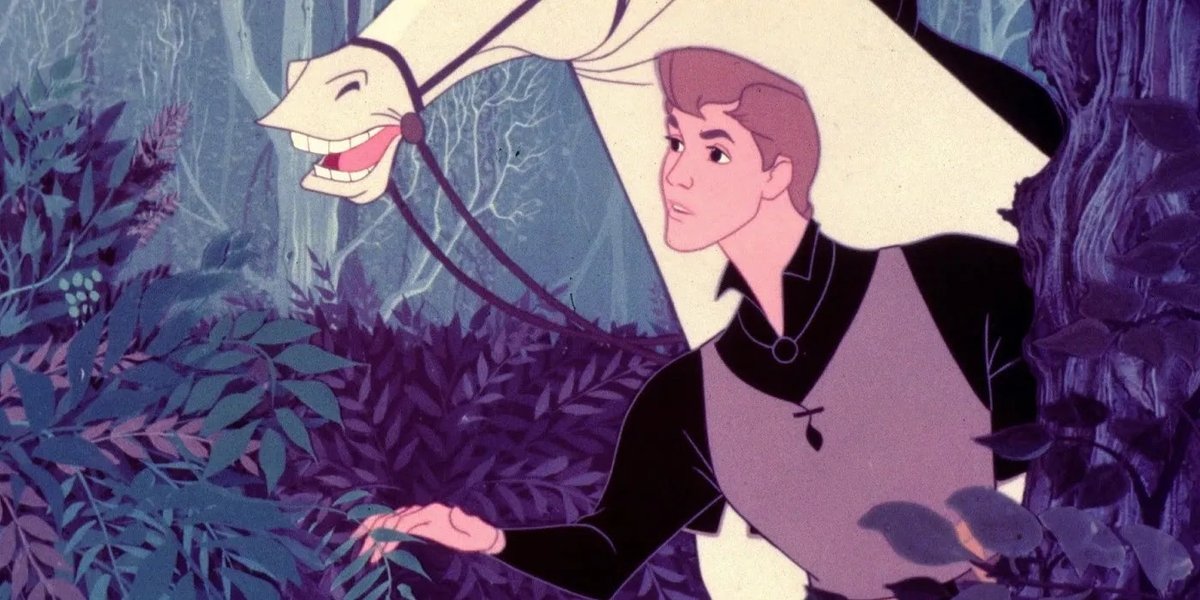
When you think of classic Disney princes, a certain image often comes to mind: charming, handsome, and perhaps a tad… passive. But one character shattered that mold, forging a dynamic path that redefined animated royalty. This isn't just about a prince; it’s about understanding Prince Phillip's Legacy: Comparing Disney's First Active Prince and how his groundbreaking portrayal in Sleeping Beauty (1959) set an enduring standard for heroism in the magical world of Disney.
Phillip wasn't content to simply wait for the damsel in distress; he was the hero of his own story, sword in hand, ready to face down a dragon. His journey from spirited suitor to dragon-slaying champion established a legacy that echoes through every subsequent animated prince, making him arguably one of the most significant—and often underestimated—characters in Disney canon.
At a Glance: Phillip's Enduring Impact
- First Named Prince: Unlike his predecessors (Snow White's Prince, Cinderella's Prince Charming), Phillip was given a proper name, grounding his character.
- Real-Life Inspiration: His name and royal bearing were inspired by Prince Philip, Duke of Edinburgh, husband of Elizabeth II.
- Breaking the Mold: He was the first Disney prince to display wit, quick-thinking, and a desire to marry for love, openly defying his father's traditional views.
- Truly Active Hero: Phillip didn't just find Aurora; he actively embarked on a quest, directly confronted and defeated the formidable Maleficent.
- Set a Precedent: His heroic actions laid the groundwork for future Disney princes to be more integral to the plot and take on villainous threats themselves.
- Later Dilution: Modern re-workings, like the Maleficent films, regrettably reduced his character to a "blank cipher," highlighting the strength of the original.
The Royal Precedent: Unpacking Phillip’s Origin Story
Before Phillip, Disney princes often served as plot devices more than fully fleshed-out characters. They were the handsome reward, the final piece of the fairytale puzzle. Snow White's prince sings, kisses, and rides away. Cinderella's Prince Charming dances and searches. Their roles were essential, yes, but rarely did they drive the narrative through their own initiative or face significant personal peril.
Enter Prince Phillip, conceived for the 1959 masterpiece Sleeping Beauty. From the moment he appeared, it was clear he was different. His very naming was a departure; he wasn't just "the Prince" but Phillip. This seemingly small detail immediately elevated his status, making him an individual rather than an archetype. It's fascinating to consider that this specific choice was a nod to real royalty, drawing inspiration from Prince Philip, Duke of Edinburgh, a figure known for his public service and spirited personality. This connection imbues Disney's Phillip with a subtle layer of dignity and purpose from the outset.
Voiced by Bill Shirley, Phillip was infused with a passion and charisma rarely seen in his animated predecessors. He wasn't a silent, stoic figure; he spoke his mind, often with a playful rebellion. Picture his exchange with King Hubert: "You're living in the past, this is the 14th century!" His quick wit and desire to marry for love, not just alliance, instantly showcased a prince with agency and a modern sensibility, even within a medieval setting. This wasn't a prince blindly following tradition; this was a prince with convictions.
From Bystander to Battler: Phillip's Active Journey
What truly sets Prince Phillip apart and firmly cements his claim as Disney's first active prince is his hands-on involvement in the story's conflict. Unlike the princes who arrive after the primary antagonist has been dealt with or the princess has been saved by others, Phillip doesn't wait for destiny to unfold. He actively participates in shaping it.
His journey begins not with a rescue, but a chance encounter in the forest with the disguised Aurora. This budding romance establishes a personal stake, making his later quest deeply motivated. When Aurora pricks her finger and falls into a deep sleep, Phillip doesn't hesitate. He discovers her fate, not through others, but by following the fairies. This is a crucial distinction: he isn't simply informed; he observes, understands, and takes action.
From there, his role escalates dramatically. He embarks on a genuine quest, directly confronting Maleficent and her minions. This isn't a passive search; it's an infiltration of enemy territory, a daring escape, and a head-on confrontation with one of Disney's most iconic and terrifying villains. The sequence where he battles his way out of Maleficent's castle, escaping the dungeon with the help of the fairies, and then hacks through a formidable thorn maze, demonstrates unwavering determination and courage. You can truly see how his character redefined the expectations for Disney's leading men, setting a new benchmark for their engagement in the plot's climax.
The Tools of a Hero: Sword of Truth, Shield of Virtue
A hero is often defined by their deeds, but sometimes, they need a little help. Phillip’s confrontation with Maleficent is made possible by the magical assistance of Flora, Fauna, and Merryweather. They arm him not just with weapons, but with symbols: the Sword of Truth and the Shield of Virtue. These aren't just props; they represent the moral core of his quest, reinforcing that his bravery is rooted in righteous intent.
This moment is pivotal. It’s a direct transfer of power and responsibility. The fairies, who have protected Aurora for years, now empower Phillip to complete the task. With these enchanted tools, Phillip faces Maleficent, who transforms into a gargantuan, fire-breathing dragon – arguably one of the most terrifying creatures ever animated by Disney.
The battle itself is epic. Phillip, armed with his enchanted sword and shield, goes toe-to-toe with the dragon. He’s not magically immune to harm; he ducks, weaves, and fights with all his might. The dragon tries to roast him alive, block his path, and crush him. But Phillip’s determination never wavers. In a climax that still thrills audiences today, he hurls the Sword of Truth directly into the dragon's heart, piercing the beast and defeating Maleficent. This is the ultimate act of active heroism, a prince not merely charming his way to a happy ending, but fighting for it tooth and nail. It’s a moment that defines him and solidifies his Prince Phillip and Sleeping Beauty saga as a standout in animated history.
Legacy Etched in Animation: How Phillip Influenced Future Princes
Phillip's trailblazing approach irrevocably altered the blueprint for Disney princes. Before him, the "prince" was almost an honorary title, a destination for the princess. After Phillip, future princes were expected to do more than just look handsome; they were expected to act.
Consider the princes who followed:
- Prince Eric (The Little Mermaid): While often criticized for some passive moments, Eric actively sails the seas, confronts Ursula's magically enhanced form (albeit briefly), and ultimately plays a crucial role in defeating her. He’s driven by his own desires and takes initiative to find the girl who saved him.
- The Beast/Prince Adam (Beauty and the Beast): His transformation is internal, but his heroic act comes in battling Gaston, defending Belle, and ultimately breaking the spell through self-sacrifice. He’s a central, active character in his own redemption arc.
- Aladdin (Aladdin): A street rat turned hero, Aladdin’s entire story is one of active pursuit—of Jasmine, of his dreams, and ultimately, of defeating Jafar. He is resourceful, brave, and the primary driver of the plot.
- John Smith (Pocahontas): Though a figure of controversy in terms of historical accuracy, within the film's narrative, he’s an explorer, an adventurer, and a peacemaker who directly intervenes to prevent conflict.
- Shang (Mulan): A captain who trains Mulan and fights alongside her, Shang is a formidable warrior and a leader who actively participates in saving China.
- Flynn Rider/Eugene Fitzherbert (Tangled): Perhaps the most direct descendent of Phillip's wit and active role, Flynn starts as a charming rogue but evolves into a self-sacrificing hero who fights for Rapunzel's freedom and defeats Mother Gothel.
Each of these characters, in varying degrees, owes a debt to Prince Phillip. He established the precedent that a prince could be charming and courageous, romantic and an action hero. He proved that audiences wanted to see their male leads take initiative, face danger, and play an instrumental role in resolving the conflict, rather than just being a reward at the end. The shift towards princes being partners in heroism, rather than mere recipients of affection, can be traced directly back to Phillip's dragon-slaying heroics.
The Shadow of Reimagining: What Went Wrong with Later Philips?
The power of Prince Phillip’s original portrayal becomes even more evident when contrasted with his much-criticized depictions in live-action re-workings, specifically the Maleficent films (2014 and 2019). These movies, while attempting to give the villain a sympathetic backstory, unfortunately minimized the very prince who made the original Sleeping Beauty so impactful.
In Maleficent, Phillip (portrayed by Brenton Thwaites) is largely relegated to the background. His wit is gone, his active role nonexistent. He's charming, yes, but devoid of the agency and spirit that defined his animated counterpart. The epic conflict is reduced, and Phillip becomes a passive observer, a "blank cipher" in a narrative that shifts focus away from his heroic journey.
The sequel, Maleficent: Mistress of Evil, with Harris Dickinson taking on the role, fares little better. While given slightly more screen time, this Phillip still lacks the compelling personality, quick-thinking, and active bravery of the 1959 original. The grand, personal battle with Maleficent is replaced by a more general, large-scale war, where his individual heroism is diluted.
This stark contrast serves to underscore just how groundbreaking and essential the original Sleeping Beauty depiction of Phillip truly was. By stripping him of his defining characteristics—his wit, his determination, his active role in confronting evil—the later films inadvertently highlighted the unique strength and pioneering spirit of Disney's first active prince. They demonstrate that a prince isn't just about his title or good looks; it's about his character, his choices, and his willingness to fight for what he believes in.
Why Phillip Still Reigns Supreme (for Many)
For many Disney aficionados and animation historians, the original Prince Phillip from Sleeping Beauty isn't just an active prince; he’s arguably the best Disney prince. Why does he hold such a high esteem?
It's a combination of factors:
- A Complete Arc: From his playful banter with his father to his determined pursuit of Aurora and his climactic battle, Phillip undergoes a clear heroic journey. He's not just a prince; he's a young man learning to fight for love and justice.
- Genuine Threat: Maleficent as a dragon is a truly terrifying foe. Phillip's victory isn't easily won; it’s a hard-fought battle that demands courage, skill, and sheer grit. This makes his heroism feel earned and substantial.
- Active Agency: He makes choices, takes risks, and drives the narrative forward. He’s not a bystander waiting for magic to solve problems; he’s wielding the magic himself.
- Charisma and Personality: His quick wit, handsome looks, and charming demeanor make him instantly likable. He's not just brave; he's interesting.
- Setting the Standard: Without Phillip, the evolution of Disney princes might have taken a much longer, more circuitous route. He paved the way for more complex, engaging male leads.
His blend of traditional storybook charm with genuine, proactive heroism creates a character that is both timeless and ahead of his time. He embodies the ideal of a prince who is worthy not just of a princess, but of leading his own epic adventure.
Unpacking the "First Active Prince" Title: What Does it Truly Mean?
The phrase "first active prince" might seem straightforward, but it’s worth clarifying what this truly entails in the context of Disney animation. It's not just about showing up or being physically present. It’s about driving the plot's resolution through direct, self-initiated action against the primary antagonist.
Let's break down the "active" components that solidify Phillip's claim:
- Initiation of Quest: Phillip doesn't stumble into the solution. He decides to seek out Aurora after learning of her fate, and then actively pursues her rescue, even when imprisoned.
- Direct Confrontation: He doesn't send others to fight Maleficent. He confronts her personally, in her most powerful form, engaging in a physical, life-or-death battle. This is distinct from earlier princes who might fight guards but not the arch-villain.
- Personal Risk: Phillip faces genuine danger. He is imprisoned, nearly burned by dragon fire, and forced to overcome physical obstacles designed by Maleficent herself.
- Instrumental Victory: His actions are the direct cause of Maleficent's defeat and Aurora's eventual awakening. Without Phillip's courage and combat, the curse would likely remain.
This goes beyond mere involvement. It speaks to agency, self-sacrifice, and an unshakeable resolve to overcome evil. He wasn't just a supporting character; he was the protagonist of the film's climax, proving that a prince could be the hero of his own story rather than just the happily-ever-after.
Beyond the Castle Gates: Lessons from Phillip’s Journey
Prince Phillip's enduring legacy offers more than just entertainment; it provides a valuable blueprint for storytelling and character development that transcends animation.
- The Power of Agency: Stories are most compelling when characters actively shape their destinies. Phillip reminds us that even within predetermined narratives, agency and self-determination can make a character truly unforgettable.
- Defining Your Own Path: His early defiance of his father ("You're living in the past...") highlights the importance of marrying for love and pursuing one's values, even when they clash with tradition. It’s a message that resonates deeply with audiences striving for personal fulfillment.
- Courage in the Face of Overwhelming Odds: Battling a fire-breathing dragon is no small feat. Phillip's unwavering determination against seemingly insurmountable evil is a powerful metaphor for facing real-world challenges with courage and resilience.
- Collaboration and Empowerment: While Phillip is the primary hero, the fairies play a crucial role in empowering him. This teaches us that even the strongest individuals benefit from support and the right tools. It's not about doing it alone, but about effective collaboration.
- Staying True to the Original Vision: The diluted portrayal of Phillip in later films serves as a cautionary tale for re-imaginings. It emphasizes that stripping a character of their defining traits, particularly their agency and personality, can diminish their impact and legacy.
A Hero for All Seasons
Prince Phillip’s journey in Sleeping Beauty is a masterclass in evolving character archetypes. He was a prince who understood that love wasn't a passive reward, but something worth fighting for, actively and bravely. He didn't just sing a song and deliver a kiss; he picked up a sword, confronted pure evil, and earned his place as a true hero.
His legacy is not just about being the first to break the mold; it’s about setting a standard of heroism, wit, and active engagement that continues to influence animation to this day. When you next watch Sleeping Beauty, pay close attention to Phillip – the prince who wasn’t afraid to get his hands dirty, wield a sword, and remind everyone that even in a fairytale, true love often requires a truly active hero.